


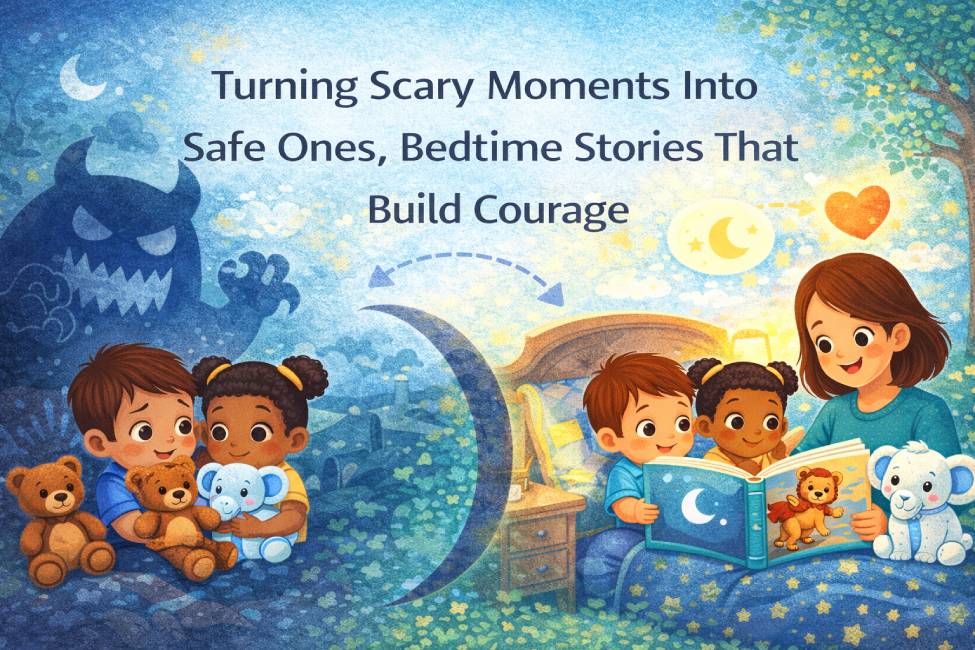
Bedtime can be one of the most tender times of day.
The house grows quieter. The lights dim. The world slows down. For many families, it is a time for connection, closeness, and stories.
It is also, surprisingly often, a time when fears surface.
When the distractions of the day fade away, children are left alone with their thoughts. The shadows seem longer. The unfamiliar sounds seem louder. Small worries grow in the quiet.
That is why bedtime stories matter so much.
A well told story does more than entertain. It can gently transform scary feelings into manageable ones. It can take something that feels overwhelming and wrap it in warmth, humor, and reassurance.
Why Bedtime Is Emotionally Powerful
Children process their day at night.
If something confused them, startled them, or made them unsure, it often resurfaces once they are under the covers. Bedtime is when they replay events in their minds.
Because children are still learning how to sort emotions, they sometimes struggle to separate imagination from reality. A minor change earlier in the day can take on new weight in the dark.
This is not weakness. It is development.
Their brains are still building the tools to regulate fear. That is where storytelling becomes a powerful bridge.
Stories Create Emotional Rehearsal
When a child hears a story about another child, or even a bear, who feels scared and then finds comfort, they are rehearsing resilience.
They are watching fear unfold safely. They are observing how it resolves. They are seeing that scary feelings can soften.
Stories allow children to experience emotion without real world consequences. They can explore worry without being in danger. They can feel tension and then relief, all within the safe container of a narrative.
This rehearsal builds confidence.
Over time, children begin to internalize the pattern. Fear rises. Reassurance comes. Calm returns.
Familiarity Is Comfort
The most powerful bedtime stories often include repetition.
A familiar phrase. A recurring nickname. A predictable rhythm.
Repetition signals safety.
In my own children’s book, Jillian Bear and the Grandpa Scare, a young bear wakes from a nap and believes her Grandpa has disappeared. A huge bear stands in the doorway, and to her eyes, he looks different. His mustache is gone.
That small change feels enormous.
What reassures her is not an explanation first. It is familiarity. The same voice. The same loving nickname, “Jilly Bear, you silly bear.” The same scent she recognizes when she pauses and sniffs the air.
Even though something looks different, the core of who Grandpa is has not changed.
For a child listening at bedtime, that message sinks in quietly. Change does not mean loss. Love does not vanish because something appears unfamiliar.
Gentle Stories Build Courage
Courage in children does not develop through force. It grows through reassurance.
When stories present fear gently and resolve it with warmth rather than drama, they teach children that bravery can look like pausing, breathing, and looking again.
A soothing bedtime adventure does not need monsters or chaos to be meaningful. Sometimes the scariest thing to a child is simply something unexpected.
When a story shows that even unexpected moments can end in a hug and an “I love you,” it rewires how children interpret uncertainty.
They begin to associate change with possibility rather than panic.
Turning Real Life Moments Into Storytime
Bedtime is also an opportunity to reflect on the day.
If your child experienced something unsettling, you can frame it as a story.
“Remember when you thought Grandpa looked different today?”
“That felt surprising, didn’t it?”
“What helped you feel better?”
By gently retelling real experiences in story form, you help your child organize their emotions. You turn confusion into clarity.
Stories slow things down. They create space for understanding.
The Parent’s Role in the Ritual
How you tell the story matters just as much as the story itself.
Sit close. Use a calm voice. Pause at comforting moments. Let your child ask questions. Allow them to predict what happens next.
When they lean into you during a tense part, that physical closeness reinforces safety.
Children do not just remember the story. They remember how they felt while hearing it.
They remember the warmth of the blanket, the softness of your voice, the rhythm of familiarity.
That combination of narrative and connection is what builds emotional resilience.
Choosing Stories That Heal
When selecting bedtime books, look for stories that:
- Present relatable fears
Resolve tension gently
• Emphasize love and reassurance
• Use repetition or sensory familiarity
• End with connection rather than conflict
Stories that highlight family bonds, especially between grandparents and grandchildren, often carry an extra layer of comfort. They reflect real relationships children already trust.
When children see their own experiences mirrored in a story, it validates their feelings.
They realize they are not alone in what they feel.
Bedtime Is More Than Routine
It is easy to see bedtime as just another task in a busy day. Teeth brushed. Pajamas on. Lights out.
But it can be much more.
Bedtime is an emotional checkpoint. It is where fear can be softened. Where reassurance can be repeated. Where courage can quietly grow.
The stories you choose, and the way you share them, shape how your child interprets uncertainty.
Small changes will always feel big to little hearts. But when those hearts are wrapped in steady love and gentle stories, the fear does not last long.
It transforms.
And sometimes, all it takes to turn a scary moment into a safe one is a familiar voice, a repeated phrase, and the reminder that underneath everything, love remains exactly the same.