


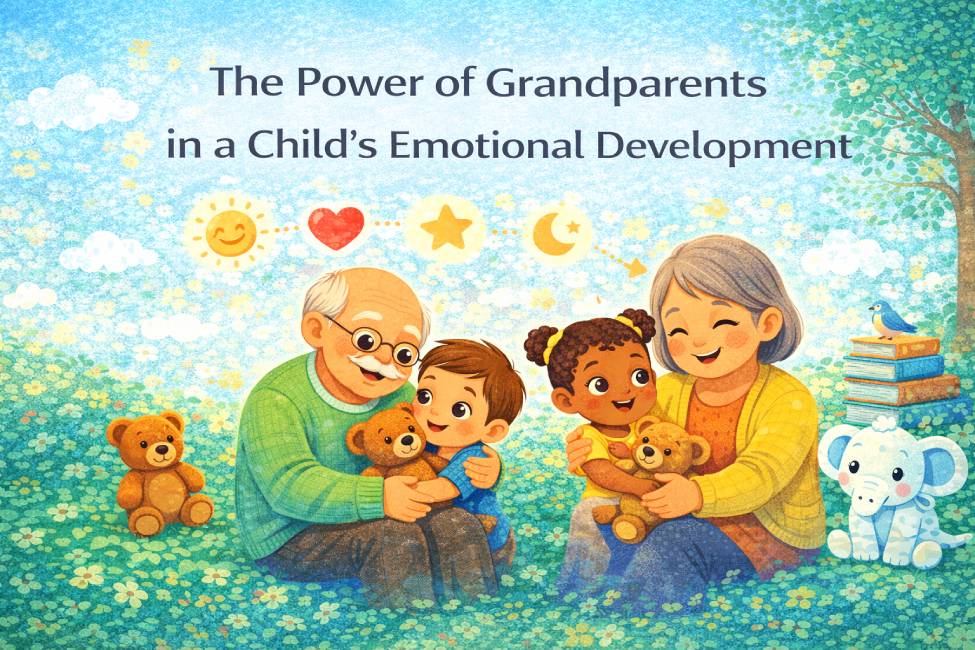
There is something steady about grandparents.
They often move a little slower, listen a little longer, and repeat the same stories with the same warmth. In a world that feels fast and constantly changing, grandparents can become emotional anchors for children.
That steadiness matters more than we sometimes realize.
Grandparents are not just occasional babysitters or holiday visitors. They play a meaningful role in shaping how children understand love, safety, and even change itself. The bond between a grandparent and grandchild carries a kind of comfort that leaves a lasting imprint.
A Different Kind of Love
Parents love their children fiercely. That love guides, protects, corrects, and prepares them for the world.
Grandparents often love in a slightly different way. Their love can feel softer, less rushed. They have already walked through decades of experience. They understand how quickly childhood passes.
Because of that, they tend to savor it.
For a child, this creates breathing room. Grandparents may have more patience for endless questions. More time for reading the same bedtime story three times. More space for sitting quietly together.
That time communicates something powerful, you are worth slowing down for.
Emotional Safety in Moments of Uncertainty
Children experience the world in a deeply emotional way. Small changes can feel enormous. A new haircut, a different routine, or even a missing familiar feature can spark confusion.
Grandparents often become stabilizers in those moments.
When a child feels unsure, a grandparent’s calm response can restore balance. Their voice, their hug, their familiar phrases all say the same thing, you are safe.
In my own children’s book, Jillian Bear and the Grandpa Scare, that emotional moment is at the heart of the story. Jillian wakes up from a nap and believes her Grandpa has disappeared, replaced by a huge bear who looks almost the same but is missing something important. His white mustache.
To an adult, it is a simple shave. To a child, it feels like a completely different person.
The fear is not about the mustache. It is about the sudden unfamiliarity.
What brings Jillian back to calm is not logic. It is recognition. Familiar words. Familiar presence. The realization that underneath the change, the love is exactly the same.
That is the quiet power grandparents hold.
Modeling Calm and Resilience
Children learn emotional regulation by watching the adults around them. When grandparents respond to fear with patience rather than frustration, children absorb that response.
A grandparent who kneels down, listens carefully, and reassures gently is teaching resilience without ever saying the word.
They show children that feelings are manageable. That surprise does not equal danger. That love does not vanish because something looks different.
These early experiences shape how children handle bigger changes later in life.
The Role of Ritual and Familiarity
Grandparents often create small rituals that children treasure.
A nickname that only Grandpa uses. A specific chair where Grandma reads. A phrase repeated every visit. A special snack. A particular way of saying goodnight.
In Jillian Bear and the Grandpa Scare, one of the most comforting elements is a repeated line Grandpa always says, “Jilly Bear, you silly bear.” That phrase becomes a thread of reassurance. Even when Jillian is afraid, hearing those familiar words helps her recognize what her eyes cannot immediately process.
Children cling to repetition because it signals stability.
When a grandparent continues the same rituals, even as small details change, it reinforces the message that the foundation is still solid.
Identity and Belonging
Grandparents also connect children to something larger than themselves.
Through stories about their own childhood, about their parents and grandparents, they build a bridge across generations. They give children roots.
That sense of belonging strengthens emotional development. When a child feels part of a bigger family story, they feel less alone in the world.
Even simple interactions, baking together, telling family stories, looking at old photographs, deepen that connection.
Children begin to understand that love stretches across time.
Why Stories About Grandparents Matter
Stories that highlight grandparent relationships resonate deeply with families because they reflect real emotional experiences.
Many parents and grandparents have witnessed a moment when a child reacted strongly to something adults considered minor. Those moments are not silly. They are opportunities to teach courage gently.
Books that explore those situations in a warm and reassuring way give families language to talk about feelings.
They allow children to see that fear can be temporary, that love remains steady, and that what feels frightening at first may simply be unfamiliar.
For grandparents especially, sharing a story about a grandchild who faces fear and finds comfort in a grandparent’s arms can feel personal and meaningful.
It reinforces the truth many already know, their presence matters.
Encouraging Strong Grandparent Bonds
As parents, encouraging these relationships is one of the greatest gifts we can give our children.
Make time for visits when possible. Encourage phone calls. Let your child ask questions about family history. Celebrate the small rituals that form naturally.
If distance separates you, even simple connections, a short video call, a mailed drawing, a shared bedtime story over the phone, can strengthen the bond.
And if you are a grandparent reading this, never underestimate your influence.
Your steady voice, your patience, your repeated phrases, your hugs, they are building emotional strength in ways you may never fully see.
A Love That Lasts
The love between a grandparent and grandchild leaves a deep imprint.
It teaches that safety can coexist with change. That feelings can be worked through. That love is not dependent on appearances or routines.
When children grow up knowing that kind of love, they carry it forward. They become adults who respond to change with a little more courage. Who offer reassurance instead of alarm. Who understand that beneath surface differences, connection remains.
Grandparents are not supporting characters in a child’s story. They are pillars.
And sometimes, all it takes to remind a child of that truth is a familiar voice saying the same loving words they have always known.
Even if the mustache is gone.