


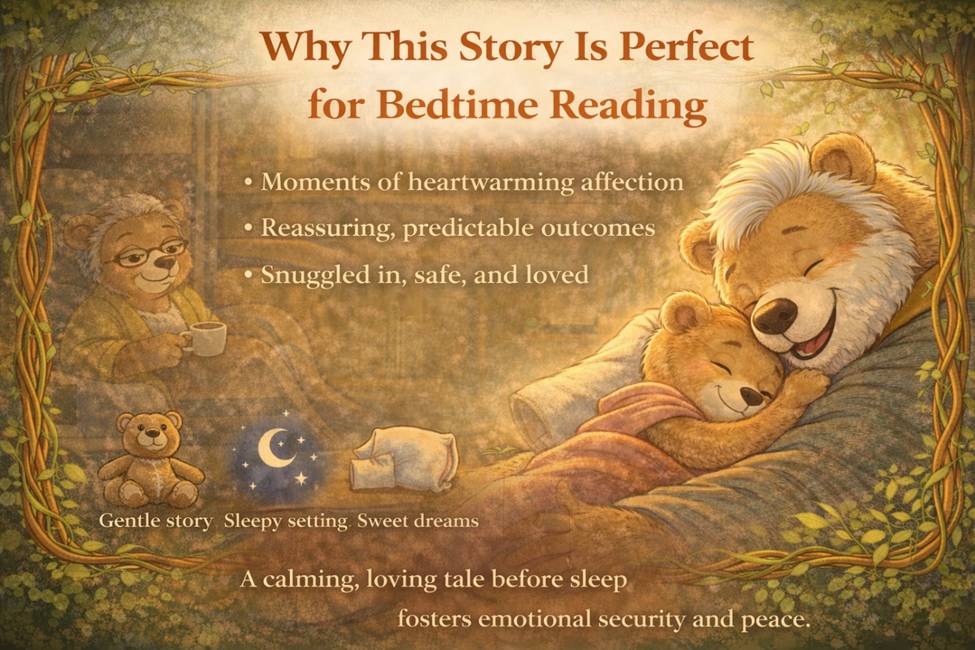
Bedtime stories serve a very specific purpose. They are not just entertainment. They are a bridge — a gentle transition from the stimulation of the day into the calm of night. The right bedtime book slows breathing, softens voices, and reassures the nervous system that it is safe to rest.
That is exactly why this story is perfect for bedtime reading.
First, the pacing is calm. The narrative unfolds gradually, without sudden twists or overwhelming action. There is a small moment of uncertainty, but it is introduced gently and resolved quickly. This matters at bedtime. Children do not need dramatic suspense before sleep. They need rhythm. Predictability. A story that moves like a lullaby rather than a rollercoaster.
The structure of this story mirrors the natural arc of winding down. There is curiosity. A hint of mild tension. Then recognition. Then warmth. The emotional journey is contained and manageable. Nothing lingers unresolved. Nothing escalates beyond what a young child can comfortably process before closing their eyes.
The tension is mild — just enough to hold attention, but not enough to activate fear in a lingering way. A brief misunderstanding, a moment of surprise, a pause — and then clarity. This small arc gives children the experience of moving through uncertainty and arriving safely on the other side.
At bedtime, that emotional pattern is powerful.
Throughout the day, children encounter small stressors: transitions, social dynamics, new information, physical changes in their environment. When they crawl into bed, their brains are still processing. A story that demonstrates “confusion resolved into comfort” reassures them subconsciously that their own small worries can also settle.
Then comes the resolution — warm, loving, and clear.
There is no ambiguity in the ending. No open question. No cliffhanger. The story closes with connection restored and affirmed. That sense of closure is essential for restful sleep. Children sleep best when they feel emotionally secure. A story that ends in love reinforces that security.
And then there is the hug scene.
This is where the magic of bedtime reading truly lives.
When the characters embrace, it creates a natural pause in the story. Parents can physically mirror what is happening on the page. A cuddle. A squeeze. A kiss on the forehead. The book becomes interactive, not in a loud or playful way, but in a tender, grounding way.
Bedtime is one of the few consistent moments of one-on-one connection many families share each day. The hug scene gives that connection structure. It offers parents an organic opportunity to stop reading, look into their child’s eyes, and say something meaningful.
“I love you.”
And when the child responds — “I love you too” — the words echo the story’s final exchange. The boundary between the page and real life gently dissolves.
This repetition strengthens attachment. Children thrive on predictable rituals. When a bedtime story consistently ends with affection, it becomes part of their emotional routine. They begin to anticipate the cuddle. They know love will be spoken aloud. That expectation builds security.
Over time, the story becomes more than a narrative. It becomes a signal: It’s time to rest. You are safe. You are loved.
The calm pacing also supports the physical transition to sleep. A steady reading voice slows a child’s breathing. The predictable arc reduces cognitive stimulation. The warmth of the ending lowers emotional arousal. Everything about the structure supports the body’s natural shift into nighttime regulation.
Importantly, the story does not dismiss fear — it resolves it. That distinction matters at bedtime. Children do not need stories that deny difficult feelings. They need stories that move through them gently and end in reassurance.
By finishing with love affirmed, the story leaves no lingering tension in the child’s mind. The final emotional note is connection. And connection is the foundation of secure sleep.
Parents can even create a small ritual around it. After reading the final lines, pause. Close the book slowly. Whisper, “I love you too.” Turn off the light. Let the warmth of the moment linger for a few extra seconds.
Those seconds matter.
Years from now, children may not remember every detail of the plot. But they will remember the feeling. The quiet room. The soft voice. The hug. The repeated words of love before drifting to sleep.
That is what makes this story perfect for bedtime reading.
It doesn’t just entertain.
It soothes.
It reassures.
It connects.
And in the quiet rhythm of:
“I love you.”
“I love you too.”
A child learns that even as the day ends, love remains — steady enough to carry them peacefully into sleep.