


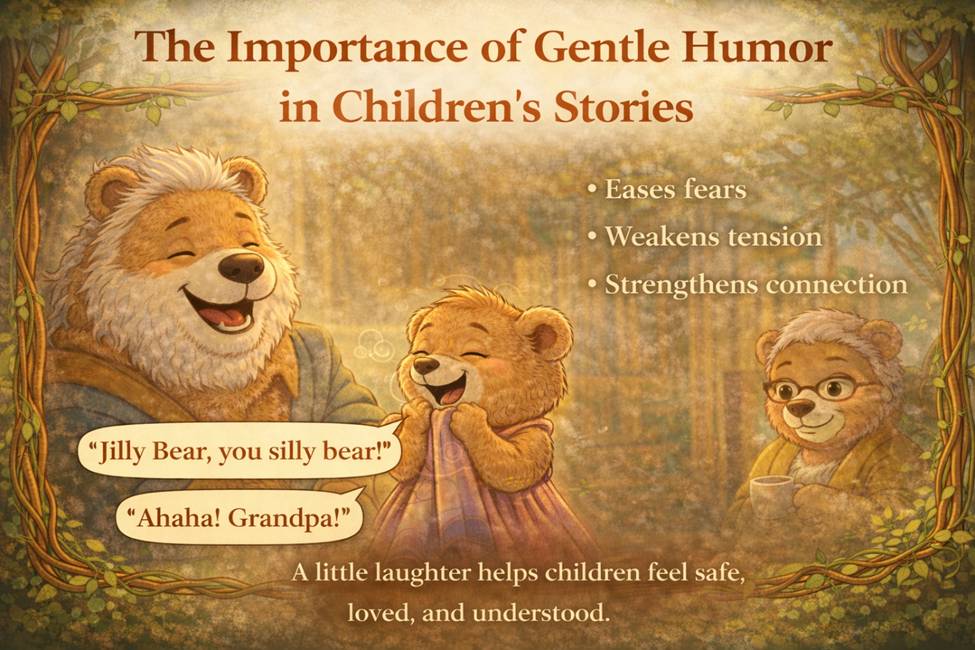
Children’s stories carry more emotional weight than we sometimes realize. They are not only tools for imagination — they are tools for regulation. The tone of a story, especially the way it handles humor, can determine whether a child feels anxious, relaxed, confused, or comforted.
That’s why gentle humor matters so much.
In this story, Grandpa “reading a book” while clearly napping is a perfect example. It’s not loud comedy. It’s not sarcasm. It’s soft, situational humor that invites a quiet giggle. A child recognizes what’s happening before the character does — or alongside them — and that shared awareness creates delight.
Gentle humor like this serves an important purpose: it reduces tension.
When a story contains a small moment of uncertainty — a misunderstanding, a surprise, a shift in appearance — children can feel that tension in their bodies. Even mild suspense activates curiosity and alertness. But when humor enters the scene, it softens the emotional charge.
A napping Grandpa who insists he’s “just resting his eyes” or “reading” is funny because it’s relatable and harmless. The humor signals safety. It tells the child, “This is not dangerous. This is playful.”
That signal matters.
Laughter and smiles calm the nervous system. They help children move from alertness back to ease. In storytelling, humor acts like a release valve. It allows children to experience a small buildup of emotion and then gently let it go.
Just as important as humor itself is affectionate repetition.
The phrase “Jilly Bear, you silly bear” becomes more than a playful nickname. It becomes a comfort anchor. Each time Grandpa says it, the child reader knows exactly what to expect: warmth, affection, familiarity.
Children thrive on repetition. It builds predictability in a world that often feels big and unpredictable. When a phrase appears again and again in a story, it becomes a cue. The brain begins to anticipate it. Anticipation creates security.
Repetition also deepens connection.
When a child hears “Jilly Bear, you silly bear” multiple times, it reinforces the loving dynamic between the characters. The phrase is not teasing in a sharp way — it’s affectionate, rhythmic, and safe. The rhyme makes it memorable. The tone makes it tender.
Children often repeat these phrases aloud. They might say them along with the adult reading. They might adopt the rhythm into their own pretend play. That participation strengthens engagement and emotional bonding.
Humor and repetition together create a powerful combination.
Humor lowers tension.
Repetition builds stability.
In children’s stories, we don’t need exaggerated punchlines or fast-paced jokes. In fact, overstimulating humor can disrupt the calming effect of a story, especially at bedtime. Gentle humor — like a dozing Grandpa pretending to read — feels authentic and soothing.
It mirrors real life in a way children understand. Many children have seen an adult nod off with a book in hand. Recognizing that shared experience makes the story feel grounded and relatable.
And when the familiar phrase returns — “Jilly Bear, you silly bear” — it wraps the moment in reassurance.
Ultimately, gentle humor reminds children that life’s small surprises are not threats. They can be funny. They can be light. They can be safe.
And when those light moments are paired with predictable, loving repetition, children learn something lasting: joy and security can exist side by side.