


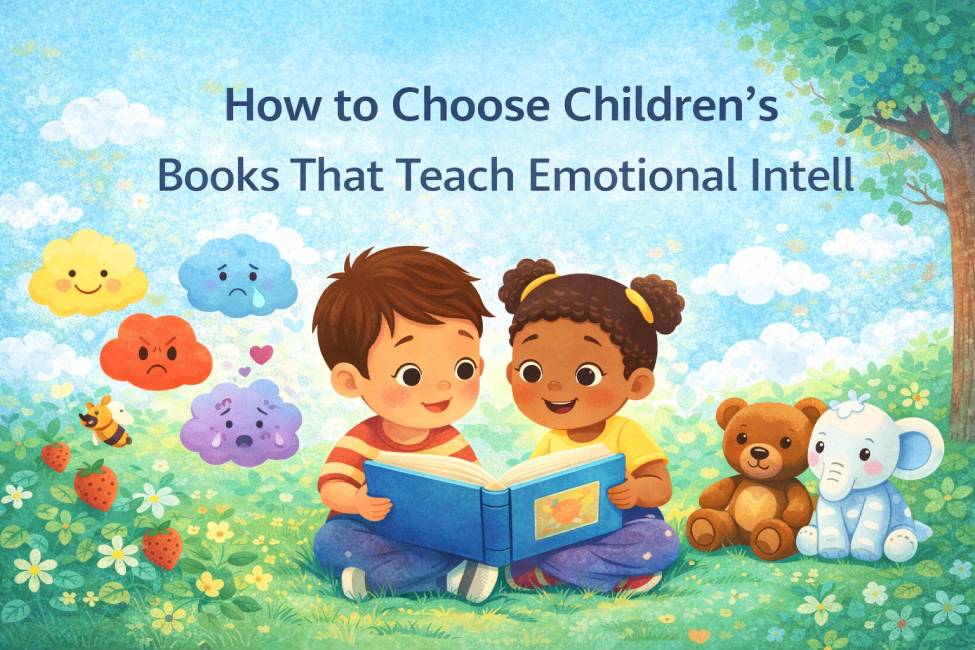
Every parent wants their child to grow up kind, confident, and emotionally aware.
We teach manners. We encourage sharing. We model empathy when we can. But one of the most powerful tools for building emotional intelligence is often sitting right on the bookshelf.
The stories we read to children shape how they understand feelings, relationships, and themselves.
Not all children’s books are created with emotional growth in mind. Some are purely silly. Some focus on adventure. Some aim for humor alone. There is room for all of that.
But if you want to intentionally build emotional intelligence, it helps to know what to look for.
Look for Stories With Real Feelings
Emotional intelligence begins with recognizing feelings.
Choose books where characters experience relatable emotions, not just exaggerated reactions. Look for stories where someone feels confused, afraid, embarrassed, jealous, or unsure.
When children hear about characters navigating those emotions, they begin to recognize them in themselves.
In Jillian Bear and the Grandpa Scare, the central emotion is fear sparked by change. A young bear wakes up and believes her Grandpa has disappeared because he looks different without his mustache.
It is a small moment, but it reflects a very real childhood experience. Something changes. It feels big. Fear follows.
That relatability is key.
Choose Books That Resolve Emotion Gently
It is not enough for a story to introduce emotion. It needs to show what happens next.
Does the character receive reassurance?
Do they learn to pause and reassess?
Do they discover that what felt frightening was actually safe?
Stories that move from fear to comfort in a calm way teach children that emotions are manageable.
When a child repeatedly hears narratives where confusion leads to understanding and fear leads to connection, they begin to internalize that pattern.
That is emotional intelligence in action.
Pay Attention to Relationship Dynamics
Books that center on healthy relationships offer powerful modeling.
Look for stories that show listening, patience, empathy, and consistent love.
Grandparent and grandchild relationships, for example, often carry natural emotional warmth. When a story highlights a grandparent responding gently to a child’s fear, it demonstrates emotional regulation without preaching it.
In the bear story, the resolution comes not from scolding or dismissing the child’s fear, but from calm recognition and affection.
That modeling is subtle, but effective.
Notice the Language Used
Emotionally intelligent books use language that names feelings clearly.
Instead of vague reactions, the story may describe a character as surprised, nervous, or unsure.
After reading, you can reinforce this by asking simple questions.
“How do you think she felt when she saw that?”
“Why do you think he said those words?”
These conversations build emotional vocabulary.
When children can name their feelings, they gain control over them.
Repetition Builds Security
Books that use repetition create a sense of safety.
A recurring phrase, a predictable pattern, a consistent tone, all of these build emotional stability.
In Jillian Bear and the Grandpa Scare, a repeated affectionate phrase becomes the emotional anchor of the story. The familiarity of those words reassures both the character and the child listening.
Repetition teaches that even when something changes on the outside, something steady remains underneath.
That concept is foundational to emotional growth.
Look for Stories That Encourage Discussion
The best emotionally rich books do not end when the final page is turned.
They spark conversation.
A story about change might lead to a discussion about a recent haircut, a new classroom, or a visit to Grandma’s house.
A story about fear might open space to talk about something your child has been quietly worrying about.
Books become bridges.
Instead of lecturing a child about how to handle emotions, you are exploring the topic together through characters they already care about.
Balance Entertainment With Meaning
Children deserve stories that are enjoyable. Emotional intelligence does not have to feel heavy.
The ideal book balances heart and warmth with lightness and relatability.
In the case of a young bear who thinks her Grandpa has vanished, the situation is serious enough to matter, but gentle enough to feel safe.
That balance keeps children engaged without overwhelming them.
The Long Term Impact
The stories you read today become part of your child’s internal narrative.
They begin to expect that fear can resolve. That love remains steady. That change does not always signal danger.
Those beliefs shape how they approach friendships, school challenges, and even adulthood.
Choosing books intentionally is not about perfection. It is about planting seeds.
When you select stories that honor emotion, model empathy, and end with connection, you are giving your child more than entertainment.
You are giving them tools.
And in quiet moments before sleep, when a story about a frightened little bear turns into a reassuring hug, those tools are being built one page at a time.