


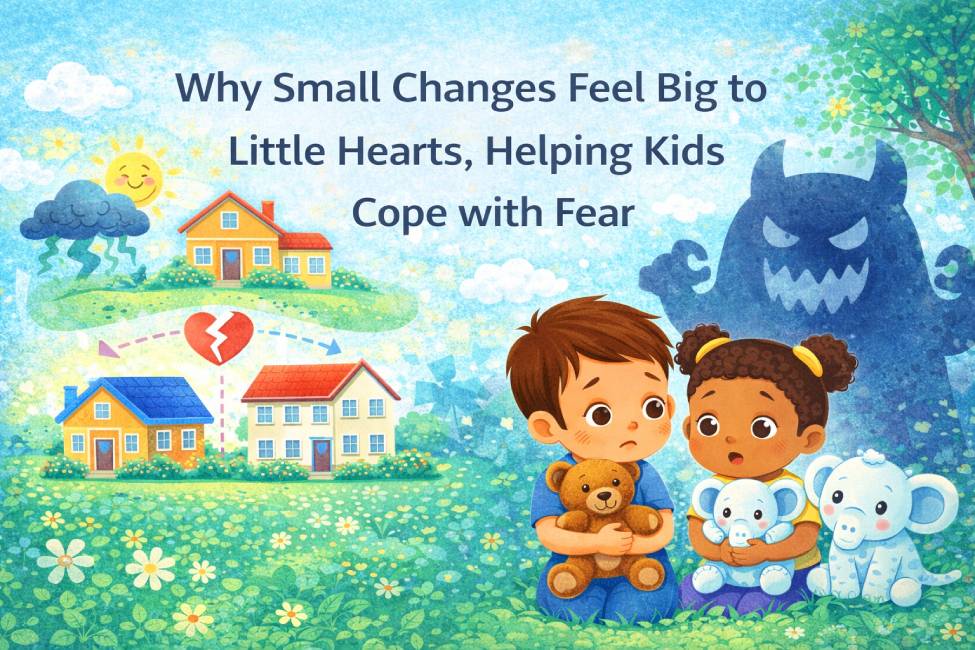
If you have ever watched a child react to something that seems small to you but enormous to them, you already understand this truth, little hearts feel things in a very big way.
A haircut. A new teacher. A different bedtime routine. A missing stuffed animal. A grandparent shaving a mustache.
To adults, these changes may feel minor, even forgettable. To a child, they can feel like the ground shifting beneath their feet.
Children live in a world built on familiarity. Their sense of safety comes from what they can predict, what they recognize, what feels the same today as it did yesterday. When something changes, even slightly, it can create uncertainty. And uncertainty often feels like fear.
Why Change Feels So Big to Kids
Children do not yet have the life experience to quickly process change. Adults know that hair grows back, routines adjust, and loved ones are still the same people even if they look different. Children are still building that understanding.
Young kids rely heavily on visual cues and patterns. They recognize people by specific features, voices, smells, and repeated phrases. When one of those markers shifts, their brain pauses. Something feels off.
That pause can turn into worry.
They might not have the language to say, “This feels unfamiliar and I do not know what it means.” Instead, they cry. They withdraw. They cling. They panic.
It is not overreacting. It is emotional processing in its earliest stages.
The Fear Behind the Tears
Often, the real fear is not about the change itself. It is about what the change might mean.
When a child sees a physical difference in someone they love, they may silently wonder, “Is this still my safe person?” If a routine changes, they may think, “Is my world still stable?” If something familiar disappears, they may worry, “What else might disappear?”
Children crave security. Their world is small and deeply relational. When something shifts, their sense of safety can wobble.
The good news is that this wobble is temporary, especially when guided with love.
How Adults Can Help Children Cope
The first and most powerful tool is calm reassurance.
Children borrow emotional cues from the adults around them. If you respond to their fear with frustration, they will feel even more unsettled. If you respond with steady warmth, their nervous system begins to settle.
Get down to their eye level. Speak gently. Use familiar words.
Instead of saying, “There is nothing to be scared of,” try, “I can see that this surprised you. It is okay to feel unsure. I am right here.”
That small shift validates their feelings without reinforcing fear.
Keep What Is Familiar
When one thing changes, try to keep other things consistent.
If Grandpa shaves his mustache, maybe he still says the same silly nickname. If bedtime shifts a little, keep the same book, the same blanket, the same goodnight phrase. Familiar routines act like anchors.
Children are incredibly responsive to sensory reassurance. The same scent, the same hug, the same tone of voice can restore their sense of safety quickly.
It reminds them, “Even though something looks different, the love is the same.”
Invite Curiosity Instead of Panic
Once the initial emotion settles, gently invite curiosity.
“Does Grandpa look a little different today?”
“What do you notice?”
“How does that make you feel?”
When children are allowed to talk through what they see and feel, they move from fear to understanding. You are helping them build emotional vocabulary and resilience at the same time.
Over time, these conversations teach them something powerful, change does not equal danger.
Normalize Big Feelings
One of the most important lessons children can learn is that feelings are not wrong.
Instead of dismissing fear, normalize it.
“Sometimes when things change, it feels strange.”
“I felt surprised too when I first saw it.”
“It is okay to need a minute.”
When children hear that their reaction is understandable, their shame disappears. They begin to trust that their feelings are manageable.
And that trust becomes emotional strength.
Stories Are a Gentle Bridge
Stories are one of the most effective ways to help children process fear.
In a story, a child can watch a character feel scared, confused, and then reassured. They can see the resolution unfold safely. It gives them a model for their own emotions.
Through storytelling, children learn that fear can be temporary. That love remains steady. That what feels scary at first may simply be unfamiliar.
Stories create emotional rehearsal. They prepare children for real life changes without overwhelming them.
The Deeper Lesson
When we help children through small changes, we are doing more than calming a moment of fear. We are teaching them that the world is stable, even when details shift.
We are teaching them that love is not dependent on appearance.
That safety is not fragile.
That feelings pass.
These early lessons become the foundation for how they handle bigger changes later in life.
Moving to a new school.
Making new friends.
Losing something important.
Facing uncertainty.
If they learn early that small changes can be survived, they build confidence for larger ones.
A Final Thought for Parents and Grandparents
It can be tempting to rush past a child’s fear. To laugh it off. To tell them it is silly.
But to a little heart, it is not silly.
It is real.
When we slow down and meet that fear with patience, we communicate something profound. You are safe. You are heard. I am not going anywhere.
Small changes will always feel big to little hearts. That is part of being young. Our role is not to eliminate change, because that is impossible. Our role is to surround change with reassurance.
Over time, children begin to internalize that steady presence. They start to approach new situations with a little more courage. They learn to pause instead of panic.
And eventually, what once felt enormous becomes manageable.
Because they know, deep down, that love does not disappear just because something looks different.
And that is a lesson that lasts a lifetime.