


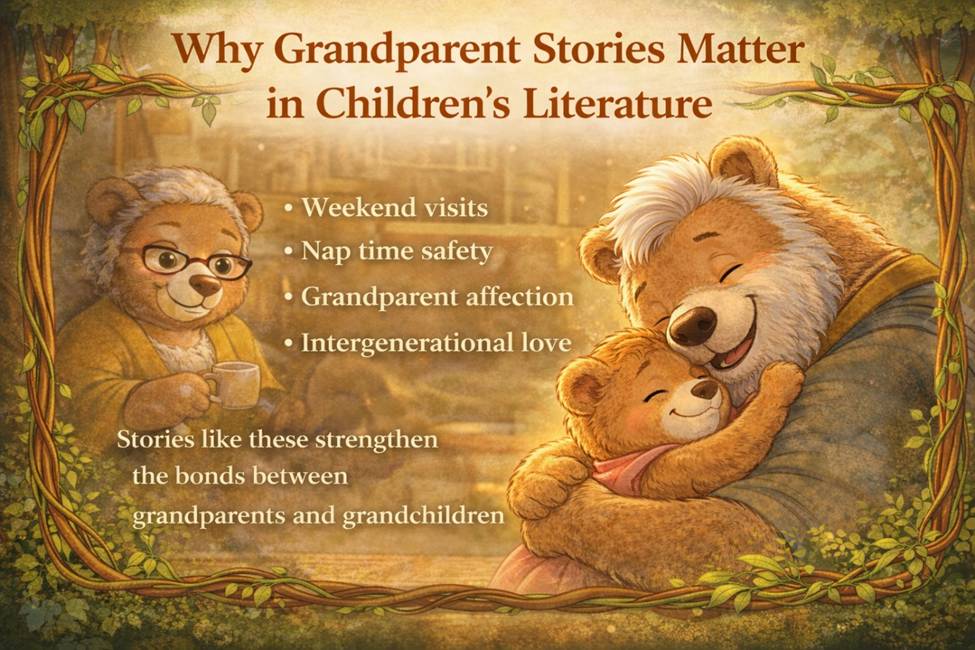
Grandparents hold a unique place in a child’s world. They are not parents, yet they are deeply protective. They are not peers, yet they are playful. They represent something steady and rooted — continuity, history, and lived wisdom.
That’s why grandparent-centered stories matter so much in children’s literature.
In this story, Grandpa Bear is described as HUGE, with white hair he proudly calls his “wisdom.” That detail may seem simple, but it carries emotional weight. To a child, “huge” suggests strength and protection. White hair reframed as “wisdom” introduces a subtle message of respect and admiration.
Aging is not presented as decline. It is presented as honor.
When children hear that white hair represents wisdom, they begin to associate aging with knowledge rather than fragility. They see grandparents not just as older adults, but as keepers of stories, experience, and guidance. That framing builds reverence in a natural, age-appropriate way.
Then comes the symbolic shift: Grandpa shaves his mustache.
On the surface, it’s a small physical change. But symbolically, it represents something deeper. Even wisdom can look different. Even familiar strength can shift in appearance. And yet — wisdom remains. Love remains. Identity remains.
For children, this is a powerful lesson.
Grandparents age. Appearances change. Voices may soften. Movements may slow. But the core of who they are — their affection, their presence, their role in the child’s life — stays intact.
Stories like this gently prepare children for that reality without introducing fear. They normalize change while reinforcing constancy in relationship
Research consistently shows that children who have strong bonds with grandparents benefit emotionally and socially. Grandparents often provide an additional layer of secure attachment. They can offer undivided attention, patience, storytelling, and traditions that root children in family identity.
Literature that highlights these bonds strengthens them further.
When children see grandparent, relationships reflected positively in books, it validates their own experiences. It also encourages conversations:
“Remember when you nap at Grandma’s house?”
“Grandpa’s hugs feel big like that too, don’t they?”
These connections deepen real-life relationships.
This book celebrates the small, meaningful rituals that define grandparent love:
• Weekend visits filled with comfort and familiarity
• The safety of napping in a grandparent’s home
• The affectionate nicknames and playful teasing
• The warmth of intergenerational love
Importantly, it does all of this without preachiness. There are no heavy-handed lessons about respecting elders. No moral lectures. Instead, respect is woven naturally into the storytelling. Admiration is shown through description. Love is demonstrated through action and dialogue.
That gentleness makes the message more powerful.
Children don’t need to be told that grandparents are important. They need to feel it through the story. They need to see a grandparent who is strong yet tender, wise yet playful, steady yet adaptable.
Grandparent stories remind children that they are part of something larger than themselves — a family line, a shared history, a legacy of love.
And when that love is portrayed as constant, even when appearances shift, it reinforces a truth children need to carry with them:
Time may change how someone looks.
But the love between generations endures.